Where does Angklung (bamboo shaken instrument) come from?
The angklung comes from West Java, the land of the Sundanese people in Indonesia. Each of these bamboo instruments sounds just one note when shaken, so a tune needs a whole team of players, each ringing in at the right moment.
Bamboo tubes in a frame
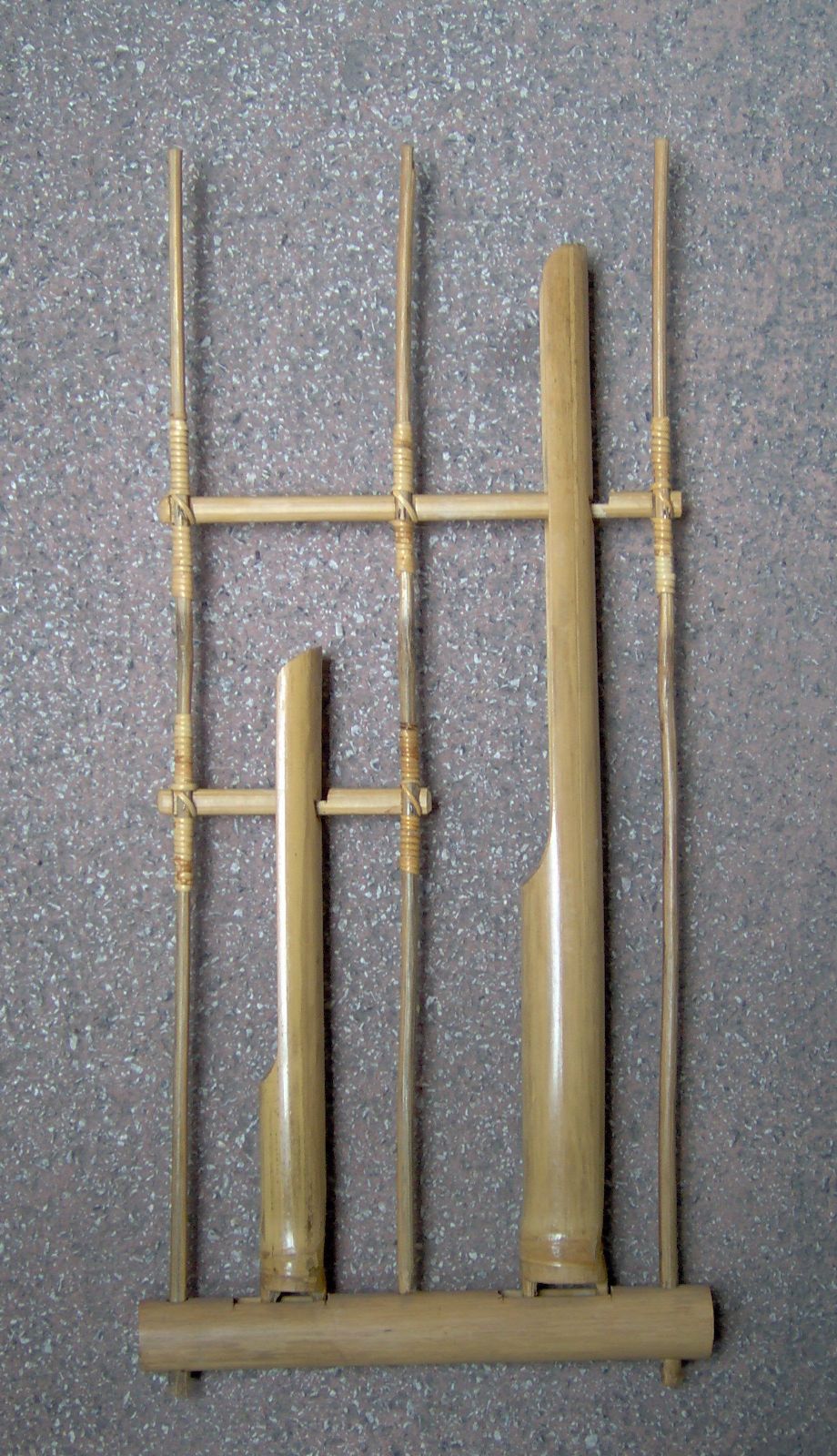
An angklung is made of two to four bamboo tubes hung in a bamboo frame and bound with rattan cords. A master craftsperson whittles and cuts the tubes so they sound a set note, tuned in octaves rather like handbells. The player holds the base of the frame in one hand and shakes it with the other, making a repeating note. The special black bamboo is harvested during the two weeks a year when the cicadas sing.
Centuries of Sundanese music
The angklung began in what are now the provinces of West Java and Banten, and the Sundanese have played it for many centuries, at village ceremonies such as rice planting and the harvest. The oldest surviving angklung, the Angklung Gubrag, was made in the 17th century in Jasinga, in the Bogor area. In Banten, the Baduy people still play an ancient form, angklung buhun, at their harvest ceremony.
From village to orchestra
Traditional angklungs use five-note scales. In 1938 Daeng Soetigna, a musician from Bandung, made angklungs tuned to the Western diatonic scale, so they could play almost any tune and even join an orchestra; they are called angklung padaeng in his honour. In 1966 his student Udjo Ngalagena and his wife Uum Sumiati opened Saung Angklung Udjo in Bandung, a centre for the instrument and its craft. UNESCO listed the angklung as Intangible Cultural Heritage on 18 November 2010.
Sources: en.wikipedia.org ↗ · ich.unesco.org ↗ · guinnessworldrecords.com ↗